
Optimize Clinical Workflows. Reduce Delays. Improve Care Execution.
We optimize clinical workflows across orders, handoffs, documentation, follow-ups, and escalations to help care teams act faster and coordinate better.

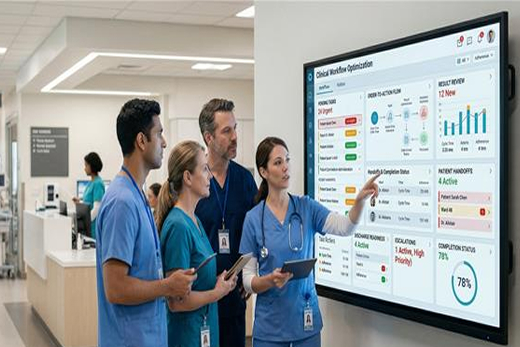
Designed Around Real Clinical Workflows, Not Generic Automation
GLP-regulated nonclinical programs generate complex data across toxicology, safety pharmacology, and DMPK from multiple systems, CROs, and study models. Spreadsheet-based workflows and disconnected laboratory environments increase integrity risk, audit exposure, and downstream delays. At IQA, we provide a unified nonclinical data management model aligned to GLP expectations and ALCOA+ principles, ensuring data remains attributable, legible, contemporaneous, original, accurate, complete, consistent, enduring, and available from the point of capture onward.
We manage study-level data flows, cross-CRO harmonization, ALCOA+ verification, and submission-ready packaging across laboratory systems, LIMS environments, and legacy source formats. Our team supports the full nonclinical data lifecycle, from raw laboratory capture through structured datasets, SEND-ready outputs, and regulatory submission support for IND, NDA, and broader lifecycle commitments.
Regulatory Foundation
Workflow Discovery
Identify delays across orders, results, documentation, referrals, discharge, and handoffs.
Role & Task Mapping
Define ownership, decision points, dependencies, and stalled actions.
Workflow Configuration
Set rules for task creation, follow-up, escalation, and exception handling.
System Integration
Connect core systems to create a unified workflow view.
Monitoring & Optimization
Track alerts, queues, turnaround, and unresolved actions to improve performance.
End-to-End SEND Expertise
From Workflow Friction to Coordinated Clinical Execution
A structured lifecycle that connects workflow discovery, task orchestration, system integration, escalation logic, and operational visibility into a more efficient clinical delivery model.
Assess Workflows
Identify friction across orders, documentation, referrals, discharge, follow-up, results, and handoffs.
Integrate Systems
Connect EHR, scheduling, diagnostics, pharmacy, care management, and communication platforms.
Configure Rules & Triggers
Set task routing, timelines, escalations, dependencies, and exception logic.
Build Workflow Enablement
Design work queues, alerts, action lists, and closure workflows.
Enable Visibility
Provide dashboards, aging views, turnaround tracking, and escalation monitoring.
Optimize Continuously
Refine workflow logic, prioritization, and performance based on outcomes.
Built on Interoperable, Workflow-Driven, and Secure Technologies
Our clinical workflow optimization solutions combine integration, orchestration, analytics, and visibility technologies required for operationally effective care delivery.
Built for Real Clinical Operations, Not Abstract Workflow Design
We combine healthcare workflow understanding, integration capability, analytics, and product engineering to make clinical workflows faster, clearer, and easier to execute.
Clinical Workflow-Led Design
We build around actual points of delay, order fulfillment, documentation lag, referral movement, discharge blockers, result follow-up, and unresolved care tasks.
Beyond Automation
Our focus is not just digitizing a step, but improving ownership, visibility, turnaround, escalation, and closure across the full workflow.
Connected Workflow Intelligence
We integrate clinical, operational, and communication systems to create a more complete view of what is pending, overdue, blocked, or unresolved.
Care-Team Ready Solutions
We design work queues, alerts, dashboards, and workflow views that fit how clinicians, coordinators, nurses, and support teams actually work.
Strong Technology Foundation
With expertise across Java, Python, interoperability, analytics, workflow engineering, and healthcare data integration, we deliver scalable enterprise-ready solutions.
Outcome-Focused Delivery
We help providers reduce delays, improve task closure, accelerate turnaround, strengthen handoffs, and improve day-to-day clinical execution.
Need to Improve Clinical Workflow Efficiency?
From order-to-action delays and referral bottlenecks to discharge readiness, result follow-up, and task orchestration - our team helps you design workflows that improve speed, coordination, and clinical execution.